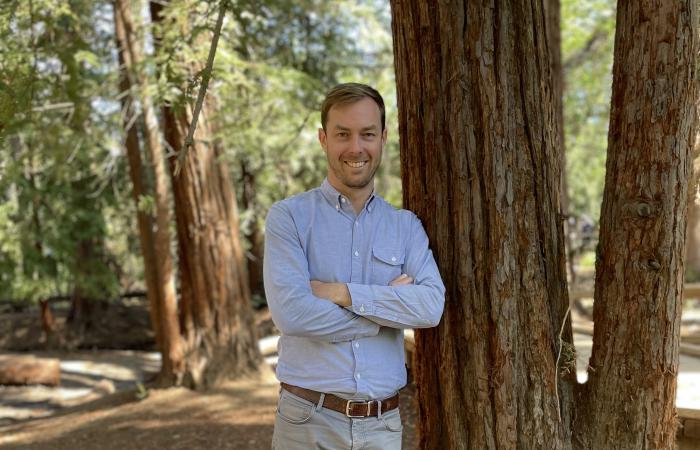
David McCollum is using his interdisciplinary expertise, international networks and boundless enthusiasm to lead Oak Ridge National Laboratory’s contributions to the Net Zero World initiative.
The senior R&D scientist’s broad expertise and interests sit at the intersection of technology and society — where engineering, economics and policy come together to peer deeply into the future. Scenario analysis, multi-sector modeling and decision science are the tools of his trade. His skills and background are playing a key role in ORNL’s research and deployment of global energy and climate solutions.
“The world is so interconnected: socially, economically, institutionally, technologically and geophysically,” McCollum said. “All these chapters I’ve spent living, working and studying in different places have cemented this idea in my head and heart that we’re all truly in this together. Solving the grand societal challenges of our time means building bridges across all of society. I see science as a powerful force to unite us, not only here within our own country but also with our fellow citizens abroad.”
McCollum has already made an impact in some high-priority areas since joining ORNL in the fall of 2021, including as lead for ORNL’s participation in Net Zero World. The initiative is a flagship collaborative effort between all of the national laboratories, the U.S. Department of Energy and other government agencies, and major philanthropies and other partners. The initiative aims to accelerate the adoption of resilient, equitable clean energy technologies and strategies in countries throughout the world.
Over the next several years, ORNL and the national labs will work with partner countries to develop customized, actionable technology and investment strategies. The goal is to transition the global energy system to net zero carbon emissions by mid-century — the ambitious target identified by scientists as being necessary to stave off the worst impacts of global climate change. So far, countries active in the initiative include Argentina, Chile, Egypt, India, Indonesia, Nigeria, South Africa and Ukraine; more are expected to join within the next two years.